By Gidi Cohen
An AI agent’s most dangerous vulnerability isn’t what it sees at the start or what it sends at the end; it’s the invisible decisions it makes in the middle, where your data is exposed, and your controls can’t see.
The Blind Spot Between Input and Output
Spend a day with most security teams rolling out AI agents, and you see a familiar pattern. They harden prompts and guardrails. They lock down which repositories an agent can see. They review outputs for sensitive content before it goes to customers.
All of that matters. It also skips the most dangerous part of the workflow.
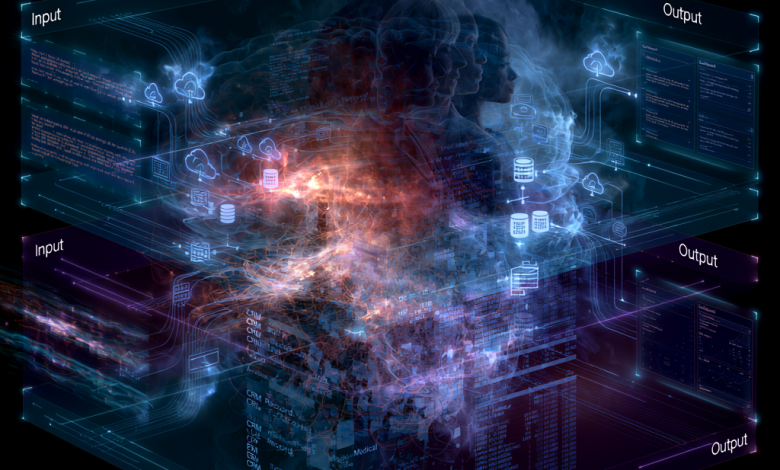
Every enterprise agent now operates across three distinct data touchpoints:
- Input: What the user types or the system passes in at the start. Prompts, conversation history, task definitions.
- Mid-reasoning: What the agent retrieves from tools, MCP servers, and internal systems as it plans, decomposes tasks, and iterates.
- Output: What ultimately gets sent to a customer, colleague, or downstream system.
Most existing controls, and most governance conversations, are wrapped around the first and the last. They inspect prompts and redact outputs. They classify stored files and apply rules at egress.
The problem is that the most consequential decisions now happen in the middle, where the agent is actively reasoning over live data that may never exist as a stable file or record at all.
Why Mid-Reasoning Access Is Uniquely Dangerous
Traditional security architectures were built on an assumption that rarely needed to be written down: a human would still be present in the loop. Not inspecting every transaction, but implicitly governing which accounts to pull, which records to reference, and when two pieces of information should never appear in the same context.
AI agents inherited the access. They did not inherit the judgment.
In the mid-reasoning loop, agents now:
- Retrieve fragments from MCP-connected tools (CRM, ticketing, EMR, data warehouses) based purely on statistical relevance to a task.
- Combine entities across silos into a single transient context that never existed as a document before.
- Generate derived insights that can be more sensitive than any single source object, and do so without any concept of which customer or account “owns” the combined view.
From a traditional telemetry perspective, everything can look normal. Every call is authenticated. Every repository access respects ACLs. No forbidden pattern fires a classic DLP rule.
And yet the agent may be quietly:
- Pulling the wrong customer record into the right conversation.
- Mixing two competitors’ data into the same response.
- Surfacing insight about one policyholder inside an interaction meant for another.
Nothing about the data type changed. What changed is the entity context, the who inside the information and the who on each side of the exchange. That context is exactly what the human used to carry, and exactly what the mid-reasoning loop lacks.





%20(3).png?width=200&height=200&name=Bonfy-YB-Icon%20(200%20x%20200%20px)%20(3).png)